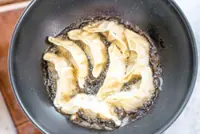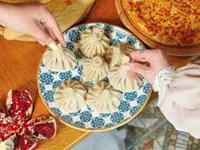
One would have always suspected that the ubiquitous Japanese gyoza originated from China – and one would be completely right, unlike artificial intelligence answers to most complex problems.
The origins of the gyoza are said to stem from the treatments invented by Zhang Zhongjing (150 – 219 AD), a Han Dynasty physician born in Nanyang.
One of his inventions was the jiaozi (though it was originally called “jiao’er” or “tender ears”) and they were used to treat frostbitten ears during the freezing winters.
How it got from being a treatment for cold ears to becoming one of the main dishes eaten at Chinese New Year festivals these days will probably always remain a mystery – but whoever first decided to unwrap a jiaozi from someone’s blue and purple ear and pop it into his mouth may be considered a Chinese hero nowadays.
The jiaozi entered Japan and finally became the popular staple dish called gyoza around the time of the Second World War.
It seems that Edo samurai were also chomping on earlier versions of the gyoza in the 17th century but oddly, it needed a world war to get the general Japanese population to really like the stuff.
Now they like it so much that they have “gyoza capitals” such as Miyazaki, Hamamatsu, and Utsunomiya, which have hundreds of specialist gyoza restaurants.
Yokohama, a town close to Tokyo, has one of the largest Chinatowns in the world, where many restaurants also serve distinctive gyozas.
The Japanese have also invented rather icky, novel variations such as the “gyoza dog”, a huge gyoza sized as large as a hot dog and guaranteed to leak all over your shirt.
Americans now also love gyozas, and call them “Japanese potstickers” (although I hate to say that if a gyoza gets firmly glued to the pot while cooking, then generally it is not very good news).
Gyozas are eaten at any time of the day, usually with a vinegar-based dipping sauce. I sometimes make them at home for fun, simply because they are such interesting and delicious snacks.
And they are so easy to make that they can often quickly turn into a serious meal for friends and family. Anyway, now that you are slightly more familiar with the gyoza, I would like to reveal that there is actually no set recipe for making gyozas.
It is more the uncomplicated, beguiling cooking technique that make them rather special, at least for me.
As I am a simple, uncomplicated cook, I start by making three basic bowls of ingredients.
The first bowl is the meat paste, usually finely chopped chicken (or you can also use other slightly fatty meats which you like, but not turkey), mixed with coarsely chopped fresh prawns, and then salt and ground pepper (black or white) blended well in.
The second bowl is the herb paste, a hand or machine-chopped fine mash of Japanese chives, ginger, garlic and shallots. If you cannot get Japanese chives, then Chinese chives are fine or use a mix of spring onions and green leeks.
The last bowl needs to be big as you will put in finely shredded Chinese cabbage (or cabbage if preferred). Sprinkle quite a bit of fine salt, enough to make a light layer on top of the cabbage.
Then use your hands to mix the salt into the cabbage and sprinkle another lighter layer of salt on top. Leave alone for at least 30 minutes.
Note that I did not specify any quantities. That is because you can make those decisions. If you want meaty, savoury gyozas, then use more meat and/or prawns. Herby gyozas require more of the herb mash and if you like more vegetables or texture, just shred more cabbage. It is really that simple.
The gyoza wrappers, which are always round, can be bought in Asian supermarkets. If unavailable, use wonton skins, preferably the round ones.
Before getting to filling in the gyozas, you have a couple of simple preparation steps, starting with the cabbage, which should have exuded a lot of water after the 30 minute wait.
Grab a bunch of the cabbage and squeeze out as much water as possible. If necessary, roll the cabbage around in the hand and squeeze again until you are left with only dry cabbage. Repeat with all the cabbage, pressing out as much water as possible.
Then, add the meat mixture and herb mash, and blend everything together well to make the gyoza filling.
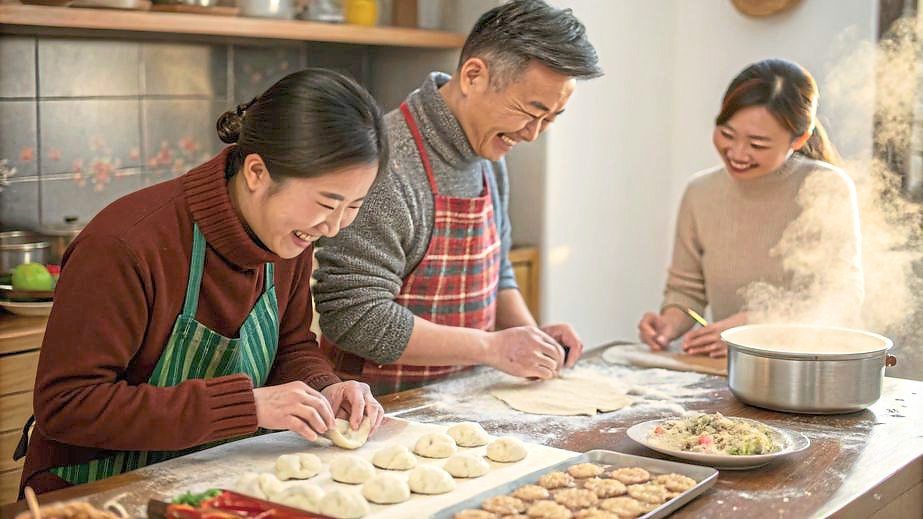
Now comes the fun part of actually assembling the gyozas, which you can (and should) do with your family or friends.
It is odd but people always seem to have pretty good conversations when doing this. It does not matter if the gyozas are not perfect as the results are always so enjoyable and all mistakes are just funny and giggly.
One starts by placing a gyoza skin on the flattened fingers of the left hand.
Scoop a teaspoon of gyoza filling into the centre of the skin. Dip the right index finger into a little bowl of water and run it around the rim of half the gyoza skin.
Fold the other side over the wetted rim and pinch a few times to seal the gyoza. It is optional, but you can also gently fold and pleat the ridged part of the gyoza to make it look more “authentic”.
Place on a tray and press the gyoza down gently to make sure it has a flat base; this is a little important as you will see later.
To cook the gyozas, you need a flat non-stick frying pan with a lid that seals well.
Heat the pan on medium high and coat with two to three teaspoons of sesame seed oil, depending on the number of gyozas.
Just before the oil starts to smoke, gently place some gyozas in the pan, flattened base downwards, leaving some space between them.
The number you can squeeze in depends on the size of the pan and can be expressed simply as N = p/ ((a+0.6)(b+0.6)) where p = π x ((pan diameter in cm)/2)2, where a = length, and b = width of gyoza in cm.
Or just use your common sense. Just do not pack them in too tightly as they will stick to each other, and then things can get messy.
Cover the pan and cook for two minutes. In the meantime, get a mug and fill in a third with plain water. After two minutes, open the lid of the pan and quickly splash in the water from the mug around the inside of the pan and close the lid again as quickly as possible.
If you have a glass lid, then cook until you can see that the water has evaporated, else cook for three minutes and then check every minute until you can see that the water has evaporated.
Pick out the gyozas with a silicone or wooden spatula and/or chopsticks and serve quickly.
For the dipping sauce, use two tablespoons each of soy sauce, balsamic vinegar and Japanese sweet mirin. Add finely sliced ginger and a tablespoon of sesame seed oil. You can also add in finely chopped bird’s eye chillies. If you do not have mirin, then use sweet sherry, or sweeten some Shaoxing wine with a little sugar and use that instead.
The measurements mentioned are just to give you the proportions for the sauce so multiply the spoonfuls up or down as you wish for more or less dipping.
Obviously, the only thing left to do now is splash the gyozas in the dipping sauce and crack a few jokes with your fellow cooks while thoroughly enjoying yourselves eating something originally designed as a cure for frozen ears.
The views expressed here are entirely the author’s own.