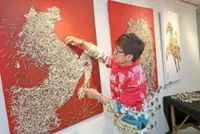
A walk through an art gallery is often a quiet, contemplative experience. But what if every painting had a soundtrack, or sparked a melody in the viewer’s mind?
At Kuala Lumpur's Galeri PETRONAS’ latest exhibition, visitors can listen as much as they look, reflecting on how sound shapes the way art is felt and remembered.
The What Song Do You Hear When You See This Painting? exhibition, running through April 26, brings together 12 artists and over 90 works across painting, sculpture and printmaking.
The show spans a wide range of visual styles and musical references, drawing from classical compositions, acid jazz, Nusantara rhythms and ambient soundscapes.
The participating artists include some of Malaysia’s most notable names: Choong Kam Kow, Sharifah Fatimah Syed Zubair, Tajuddin Ismail, Mad Anuar Ismail, Juhari Said, Chang Fee Ming, Suzlee Ibrahim and Rafiee Ghani.
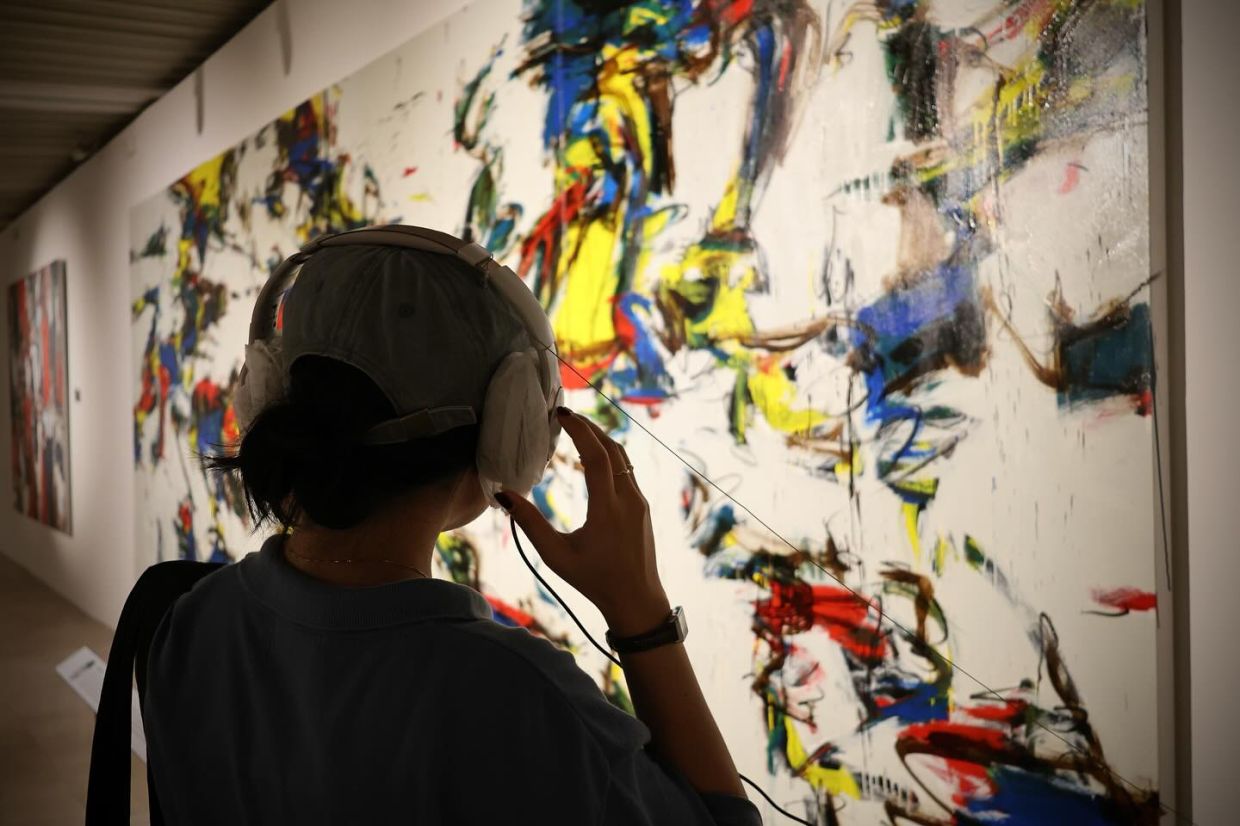
Legendary musician M. Nasir, a trained painter with a body of abstract works, enriches the show’s dialogue between visual art and music.
Works from the Galeri PETRONAS collection were jointly selected with guest curator Jamal Afiq Jamaludin, who wants visitors to be active participants rather than passive viewers.
“Many exhibitions have explored the intersection of art and music, but we’re pushing the idea further here. We’re asking visitors what songs or sounds are triggered when they encounter the works.
"On social media, a ‘day at the gallery’ is often paired with a specific soundtrack, so this becomes a kind of social experiment – a way to understand today’s gallery experience,” said Jamal in a recent interview.
Pursuing a PhD in Arts and Health at Universiti Malaya, Jamal explores how curating through salutogenesis, art theory and psychology can help address rising mental health concerns.
Music takes on a central role in Jamal’s curatorial approach. To deepen the visitor experience, selected artworks are paired with headphones and individual music players, while other sections feature ambient soundscapes through the gallery system, subtly shaping the mood of each space.
“The songs can reflect the time and place in which a work was created. In several sections, pieces from 20 to 30 years ago are paired with music from the same era, adding a layer of nostalgia.
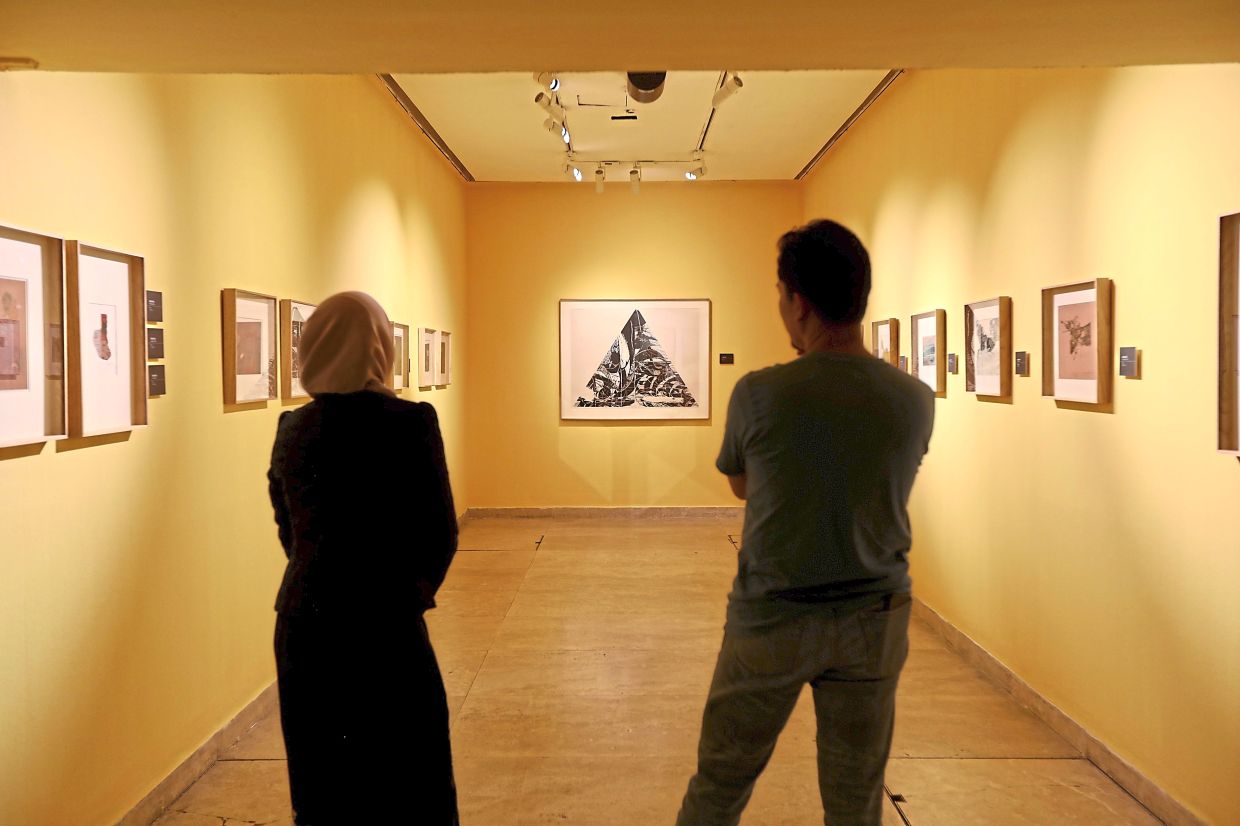
“For instance, printmaker Juhari Said’s works from the 1980s and 1990s – produced while he was studying in Japan under (master printmaker) Yoshisuke Funasaka – are accompanied by Japanese City Pop,” said Jamal.
The exhibition also brings together several figures who have shaped generations of Malaysian artists.
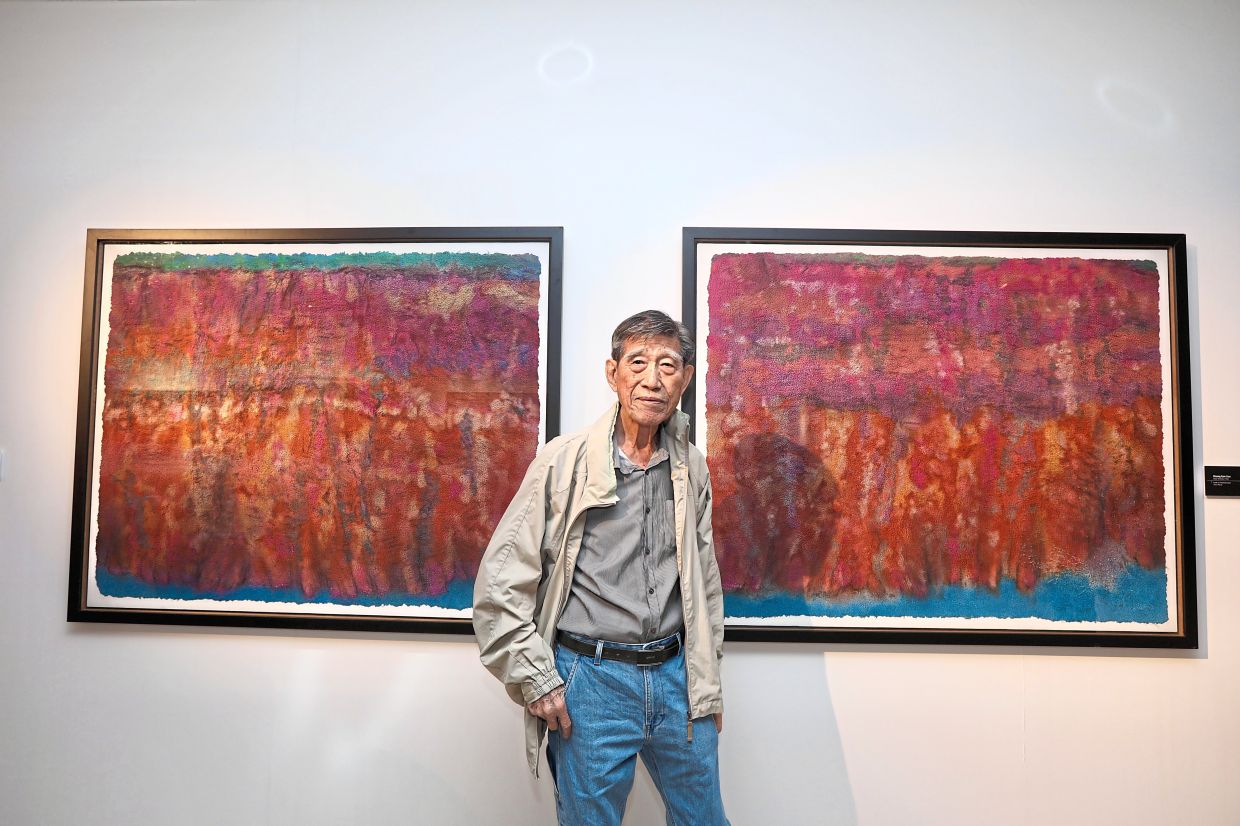
At 91, Choong remains an inspirational presence – widely regarded as a teacher and mentor whose influence continues to resonate across the art community.
“The curator selected 19 works from my Rockscape and Earthscape series (1985–1994) for this exhibition exploring art and music. These large-scale pieces, made on thick, rough handmade paper I created myself, were intended to convey monumentality and tactile presence,” said Choong during a recent gallery tour.
“The textured surfaces often invite viewers to touch the paintings, adding another layer to the experience beyond asking, ‘What song comes to mind when you see this work?’” he added.
The physical presence of Choong’s works leads viewers to pause and engage more fully, creating a sensory experience that extends beyond visual perception.
“These paintings depict the layered earth strata of the open-case tin mine pools in Kinta Valley, where I grew up, highlighting their striking colour combinations. Viewing the strata always evokes a sense of symphonic music in my mind – a feeling that persisted as I created the works on handmade paper,” said Choong.
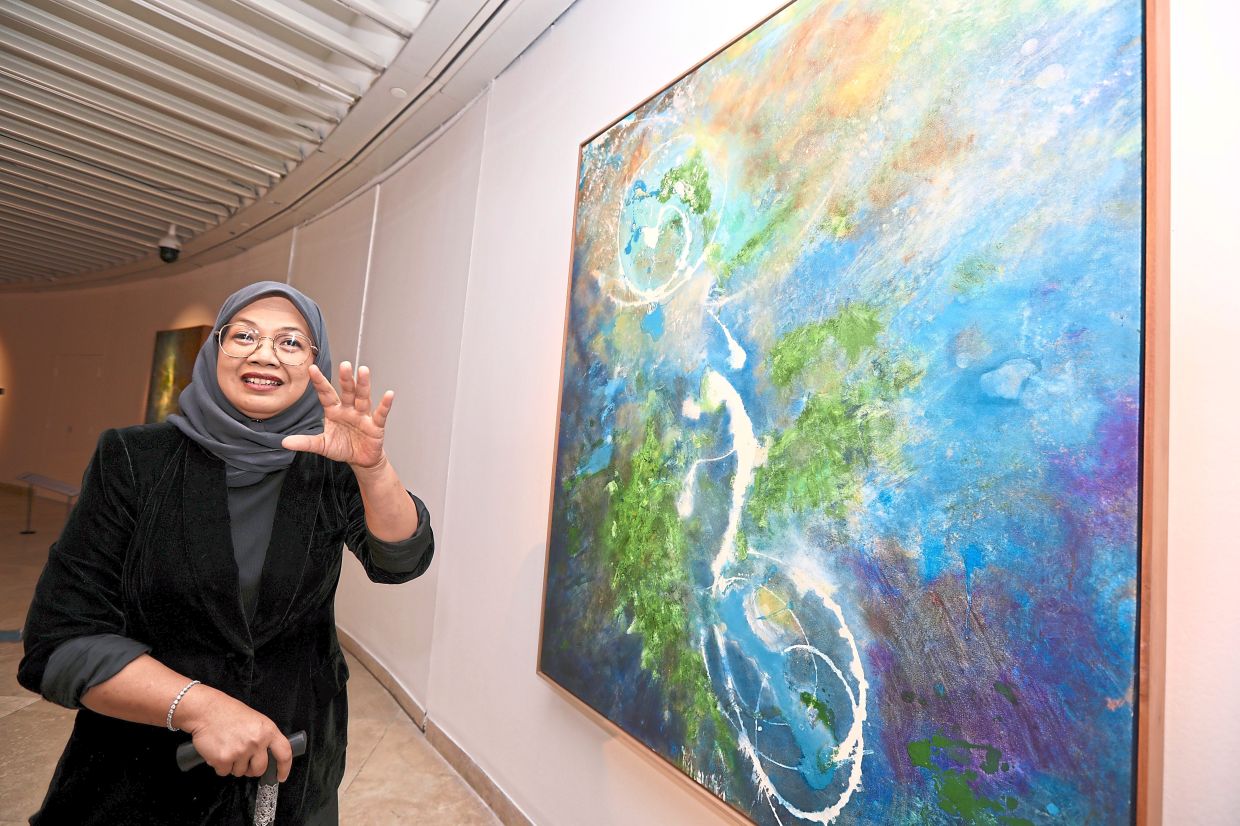
For artist-scientist Lyne Ismail, abstraction is a way to capture the inner rhythm of her life, shaped by her work as both a nanotechnology engineer and a painter.
While viewers may instinctively associate her works with cosmic soundscapes, Lyne focuses on the subtler, internal frequencies that shape human experience.
“The latest work Second Intelligence culminates that journey, uniting myself with the artist within. It embodies an inner energy that bursts yet remains controlled. I don’t aim to depict energy – the painting reenacts it,” said Lyne.
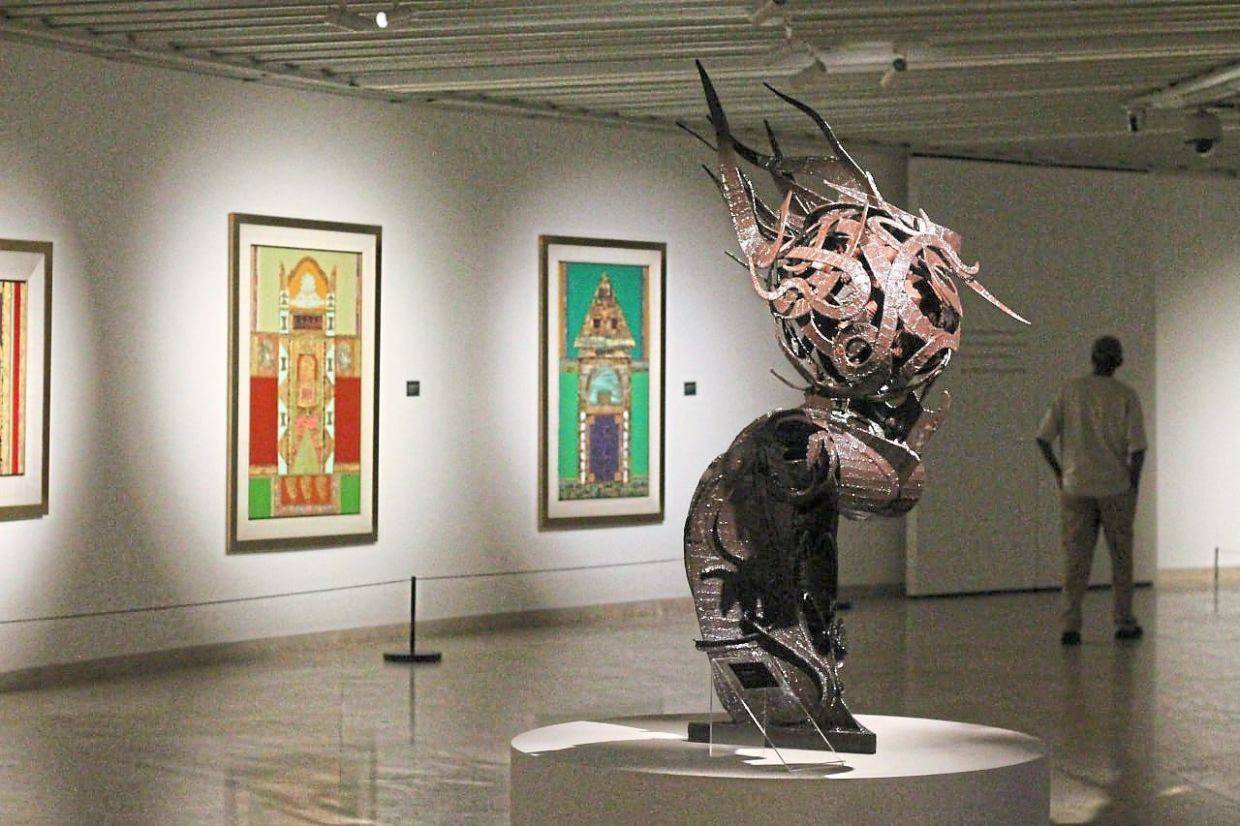
Sculpture also holds a prominent place in the exhibition, with Mad Anuar’s three works forming a striking focal point in the gallery’s circular section. Executed in metal, bronze and wood, the sculptures convey strength, resilience, and heroism drawn from everyday life.
“I grew up by the ocean in Terengganu, where waves, storms, and winds shaped my life through the fishermen’s daily routines. That bravery and resilience inform the sculptures I create,” said Mad Anuar.
Two of the works, both completed this year, demonstrate his profound engagement with Malay and Islamic traditions. Kencana presents Arabic calligraphy shaped into a circular form, while Storm Rider XVIII depicts two figures bound together as they face a towering wave.
“This is my way of preserving traditional Malay identity, which I feel is gradually fading. It reflects trust and camaraderie, navigating challenges through mutual reliance. In a world still shaped by technology, power and wealth, maintaining these values is more vital than ever,” he concluded.
The What Song Do You Hear When You See This Painting? exhibition is on view at Galeri PETRONAS, KLCC, Kuala Lumpur until April 26. Admission is free. The gallery is closed on Mondays.