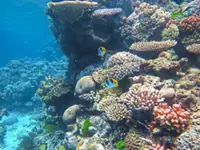
Some coral reef ecosystems have a far greater chance of surviving the effects of climate change than previously understood, according to new global research.
About 166,000sq km of coral reefs across 71 countries have capacity to either withstand or recover from the effects of global warming, a study presented by the Wildlife Conservation Society and Macquarie University found.
Roughly 60% of the climate-resilient reefs are located in Australia, the Bahamas, Cuba, Indonesia and the Philippines, scientists said in the paper outlined at a conference in Mombasa, Kenya.
Marine heatwaves have triggered an accelerating pattern of coral extinction and bleaching, impacting ecosystems that provide food and incomes to more than 500 million people, support 25% of all marine life and serve as natural protection for coastlines.The United Nations warned this month of a "deepening crisis” for oceans, pointing to intensifying heat absorption and the effects of pollution and improper fishing practices.
"Coral reefs are often framed as ecosystems beyond saving, but this research shows that there is a global set of reefs that have the potential to survive and recover,” Emily Darling, director of coral conservation at the Wildlife Conservation Society and a co-author of the assessment, said in a statement. "We now have a critical opportunity to mobilise the necessary action to protect these reefs.”
Location matters
Some reefs are better positioned because they are located in rare cool spots in the oceans, or are dominated by large branching and plating corals. Australia’s Great Barrier Reef has been documented to have some of these pockets, as has the Palau archipelago.
Elsewhere, stony corals have adapted to heat stresses and other types of ecosystems are showing an ability to recover faster from damage, the study found.
The report – supported by the Bloomberg Ocean Initiative – is based on a mapping tool developed using more than 45,000 field observations from 1960 through last year, and estimates the extent of damage caused to reefs by 2050 under a projected global temperature increase of 2.1°C relative to pre-industrial levels.
Of the reefs that are forecast to remain resilient in a hotter world, less than a third are currently in areas protected by conservation measures, according to the study.
The latest analysis is based on historical patterns and "may underestimate novel future states,” the authors wrote in the study. In addition, monitoring data are unevenly distributed across regions, they said. – Bloomberg