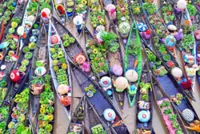
When we travel, we often want to understand what gives a place its identity, from its people and culture, to everyday life.
We visit museums, walk through historic landmarks, try local food, all just to fill in the gaps of what we know about a destination.
One of the most unique cultural identities shared by a few countries in South-East Asia is the floating market. These markets were once an important part of daily life across the region, where traders meet and locals buy their wares.
Some are still active today, but modern infrastructure and the changing ways of life have transformed how people trade.
Here are a few floating markets and communities worth checking out in our neighbouring countries.
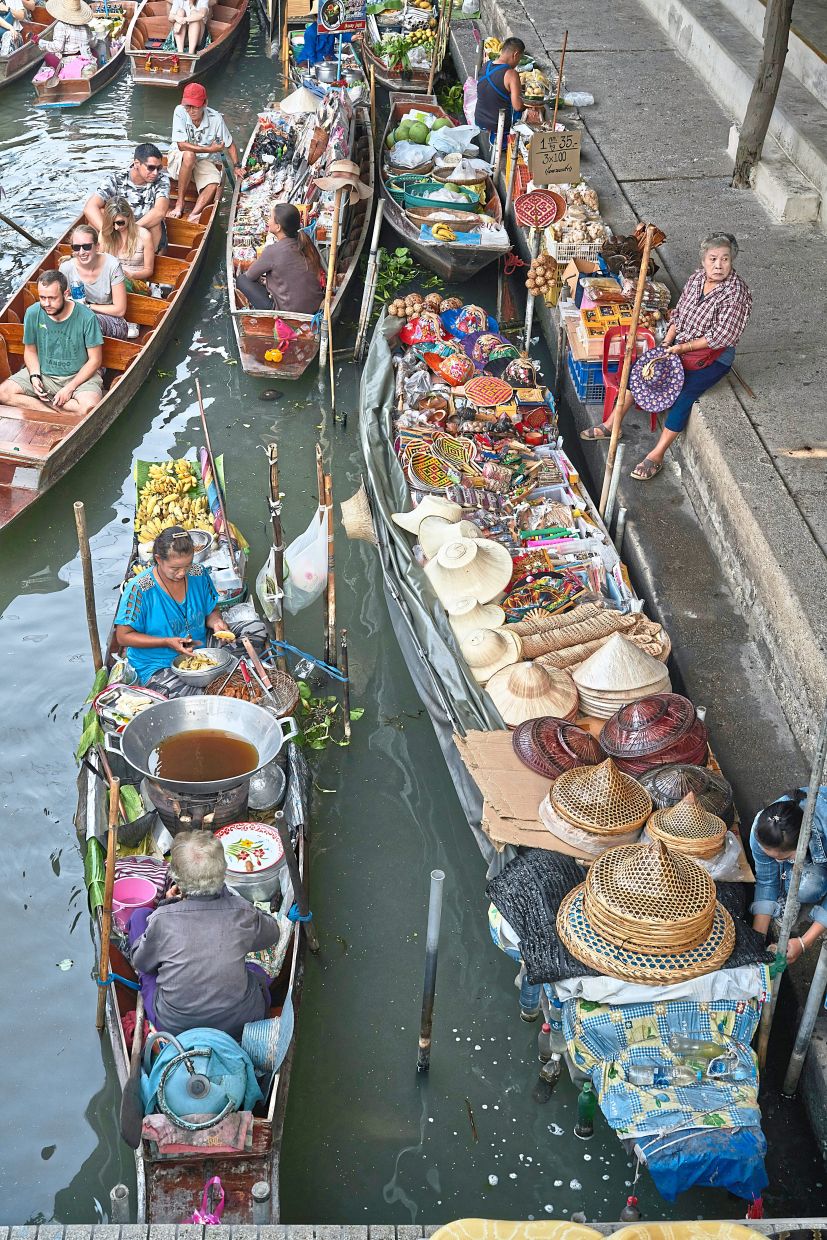
1. Damnoen Saduak Floating Market (Thailand)
Canals, also called khlongs in Thai, played an important role in shaping Thailand’s trading culture for centuries. They served as transport routes and supported agricultural communities before modern road networks came into the picture.
Back then, traditional water markets were how many villagers bought, sold and transported daily goods.
There are dozens of such markets in Thailand and among the most famous is the Damnoen Saduak Floating Market in Ratchaburi, located 80km from Bangkok.
The canal was built during the reign of King Rama IV in 1866 to connect nearby rivers and improve transport for farmers and traders.
And as more people settled near the canal, trading activities grew, which then turned the area into a busy floating market by the early 20th century.
Tourism in Thailand flourished in the 1960s. And Damnoen Saduak, too, gradually evolved into a busier and more commercialised destination.
You will see vendors sitting in narrow boats, also called “long-tails”, floating along the waterways selling fruits, vegetables, grilled seafood and all kinds of Thai street fare – offering visitors a glimpse of the market’s vibrant legacy.
Despite its popularity with tourists today, the market still reflects a piece of Thailand’s old canal lifestyle.
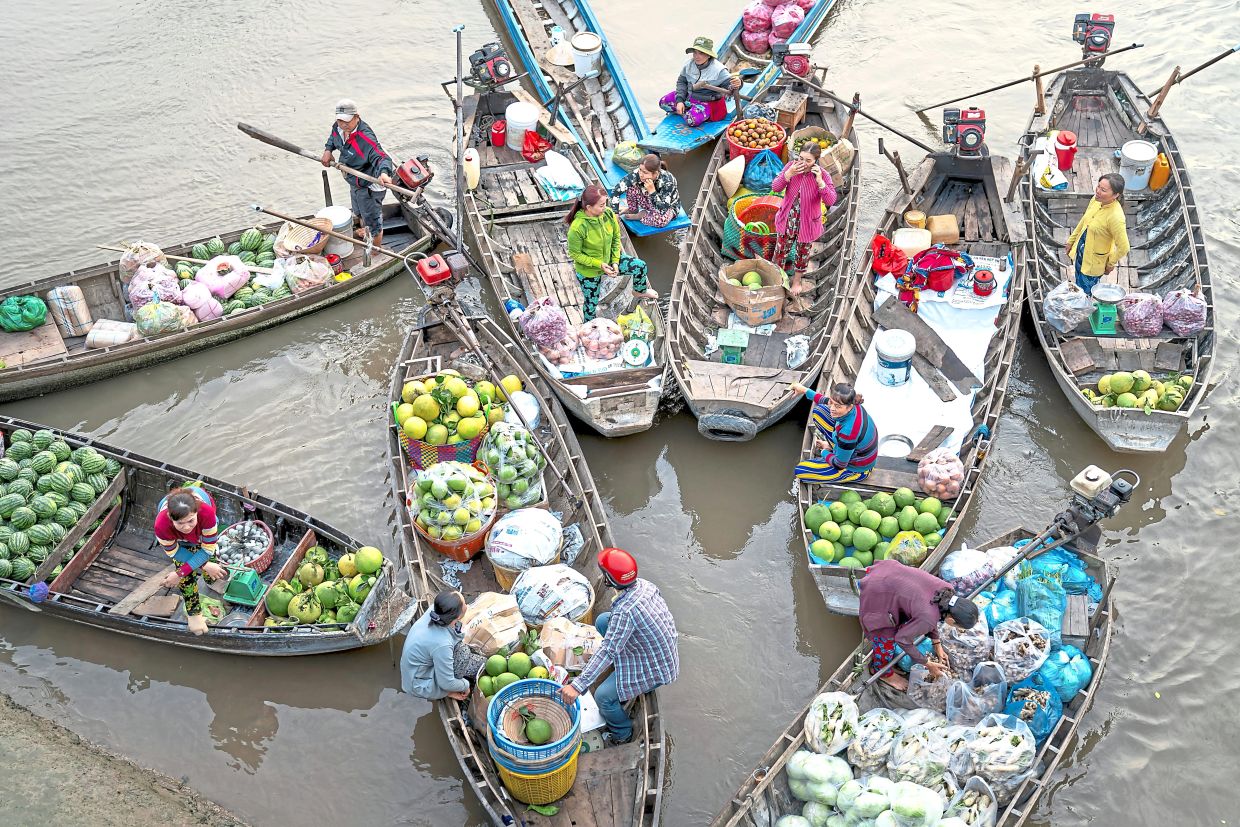
2. Cai Rang Floating Market (Vietnam)
Hundreds of wooden boats, filled with local fruits, vegetables and goods, once filled the Mekong River, which flows through six countries including Vietnam, in the 1990s.
But the number of boats has dropped as modern transport systems gradually replaced river trade.
Located along the Mekong Delta near Can Tho, the Cai Rang Floating Market was formerly one of South-East Asia’s main trading hubs for wholesale produce.
Large boats arrive here loaded with bulk produce such as rice, potatoes and tropical fruits. Smaller boats then collect the goods and redistribute them to nearby towns.
Some boats still carry a tall wooden mast, where sellers hang samples of their goods. This way, potential buyers can easily see what’s being sold even from a distance.
3. Lok Baintan Floating Market (Indonesia)
One boatman passes over a bunch of bananas, while another hands over vegetables in return. This is something you might still occasionally see today at Lok Baintan Floating Market in South Kalimantan, Indonesia.
Located along the Martapura River, the market is believed to be more than 500 years old, making it one of Indonesia’s oldest floating markets still active today.
Thousands of years before paper money was widely used (or existed), communities traded goods as a practical way to get what they needed. Surprisingly, that barter tradition is still very much alive here.
Historically, the market was also largely run by women. Many of them paddled small wooden boats known locally as jukung, traditional canoe-style boats.
Women traders may not run the show today, but they are still a familiar sight on the waterway.
4. Amphawa Floating Market (Thailand)
Life along the water at Amphawa Floating Market in Thailand’s Samut Songkhram – about 80km from Bangkok – is just as much about food as it is about boats.
Amphawa is especially known for its “canal-side” dining experience. Visitors can sit by the water and enjoy grilled seafood, Thai desserts and other local dishes while watching boats slowly glide through the canal.
Originally, the market, said to be more than 100 years old, only served farming communities in the area. Like many other traditional floating markets that are gradually losing their appeal, Amphawa met a similar fate in the mid-20th century as roads and land transport took over.
Things took a positive turn in the early 2000s when local authorities and community groups restored and brought the market back to life as part of a cultural and eco-tourism initiative.
The market officially “reopened” around 2004 and grew into one of the most popular tourist attractions in Thailand. People come here for the food, boat rides, local goods and more.
You can also take a boat tour to see fireflies glowing among the trees along the canal at night.
5. Tonle Sap Floating Villages (Cambodia)
Cambodia’s Tonle Sap Floating Villages are not really markets but they are still worth checking out.
Tonle Sap, about 15km from Siem Reap, is a very large lake that “houses” several villages within it. There are a handful of communities that live in these villages, and you will find houses, schools, shops and community halls all built on stilts or pontoons here.
(There are similar floating villages in Malaysia, such as Pulau Ketam in Selangor and Kuala Kurau fishing village in Perak.)
One of the most unique things about Tonle Sap is how the lake changes its size based on the seasons. According to the International Water Association, the lake can expand significantly into surrounding areas as water levels rise during rainy season.
In drier months it shrinks as water recedes, making some routes harder to navigate. Over the years, residents have learned to adapt to these seasonal changes, adjusting the way they travel, fish and move around the lake.
Visitors get a peek into how these communities live on water via daily tours. Sometimes, a handful of villagers will sell a range of items from seafood to souvenirs out of their small boats to approaching tours.
However, if you are asked by your guide or the villagers to “donate” books, rice and other food items by buying them from selected “charity” shops on the lake, just politely, but firmly, decline.